Optty had 145+ payment methods integrated across 140 countries, a Mastercard partnership, and real technology — but their positioning sounded like every other payment company. Partners saw them as competition. Investors couldn't articulate what made them different. The story was stuck in technical language that never reached decision-makers.
We repositioned Optty around a bigger problem: 52% of global payment methods are regional and specialized (over half the market!), yet the major processors treat them as an afterthought. By naming and claiming a new category — Specialized Payment Methods — Optty went from competing with Stripe and Adyen to building the infrastructure those companies need. Companies that saw them as competitors now saw them as specialized partners who do what they don't want to do. The investor narrative sharpened. The story went from hard to explain to a clear market opportunity to become a category leader.

Binaxity had a genuinely novel product — a co-investment platform that pairs next-gen investors with institutional capital to build long-term wealth through Bitcoin and ETFs. But the story was complicated for investors to see the value. It sounded like just another investment product and not a new idea.
We reframed the narrative around the real problem: Millennials and Gen Z are the least wealthy generation, 68% don't trust banks, yet the only financial tools they're offered are debt and speculation. Binaxity isn't a trading app — it's the first platform that gives a generation locked out of compounding a way back in. That shift turned a product pitch into a market thesis that investors, partners, and users could all understand and, more importantly, repeat.
The Western Riverside Council of Governments Property Assessed Clean Energy Financing Program (WRCOG PACE) was hard to understand and remember. WRCOG PACE was technically accurate, but meant nothing to anyone outside the halls of the government sponsors. Contractors couldn't explain it. Homeowners found it confusing, and the program wasn't taking off. Add to that "green financing" was already overdone, politically divisive, and failing to move the middle market.
We repositioned the program as HERO — Home Energy Renovation Opportunity — and reframed the entire narrative. This wasn't about being green. It was about energy independence, economic stimulus, jobs, and community strength. We created a new category called Home Energy Improvements — that delivered more than just financing. HERO wasn't in the financing business; it was in the empowerment business. The rebrand turned a government acronym into a movement brand, giving people a story worth repeating: you're doing the right thing for yourself, your community, and your future. That shift made participation feel like joining something bigger, not filling out paperwork.
People started telling other people because they were proud of their affiliation with the program. It became a stamp of approval for contractors, local government leaders promoted it as their success story, and the program provided enhanced consumer protections never seen before in the category — which was part of the go-to-market strategy developed. HERO's success proved the narrative model — and laid the groundwork for repositioning the company behind it, which became Renovate America.
After the HERO program proved that narrative repositioning could move a market, the company behind it needed to catch up to the story it was already telling. PowerHouse had the mechanics of a breakthrough product — PACE financing that let homeowners fund energy-efficient upgrades through their property taxes — but the name positioned them as a utility, not a solution for homeowners and contractors. The story was trapped at the transaction level: rates, terms, approvals. Contractors, homeowners, and municipalities first needed to understand that it wasn't just a financing solution — they could now be part of building a better future for their community.
The company went from $50M in loan originations to over $3B in just 3 years. We repositioned the company as Renovate America and reframed the entire narrative around collective impact. This wasn't about financing renovations — it was about building a future where government, business, and consumers work together to reduce costs, help the environment, and strengthen communities. That shift transformed the company from a lending product into a platform for participation. "Let's build our future, together" wasn't a tagline. It was an invitation that turned customers into co-creators of something bigger than a home improvement loan.
As co-founder, I helped build Perfect from the ground up — a new kind of cannabis brand built entirely around how the product made you feel, not what strain it was. We created a brand narrative around helping people feel their own kind of perfect, with products engineered to deliver a consistent, repeatable experience every time.
When the industry struggled to survive, it wasn't practical to continue marketing a consumer product. But the technology behind it — the process that made the experience consistent — turned out to be unique and protectable. Perfect was awarded four U.S. Composition of Matter Utility Patents, and the process is now being licensed to manufacturers and brands across the U.S.
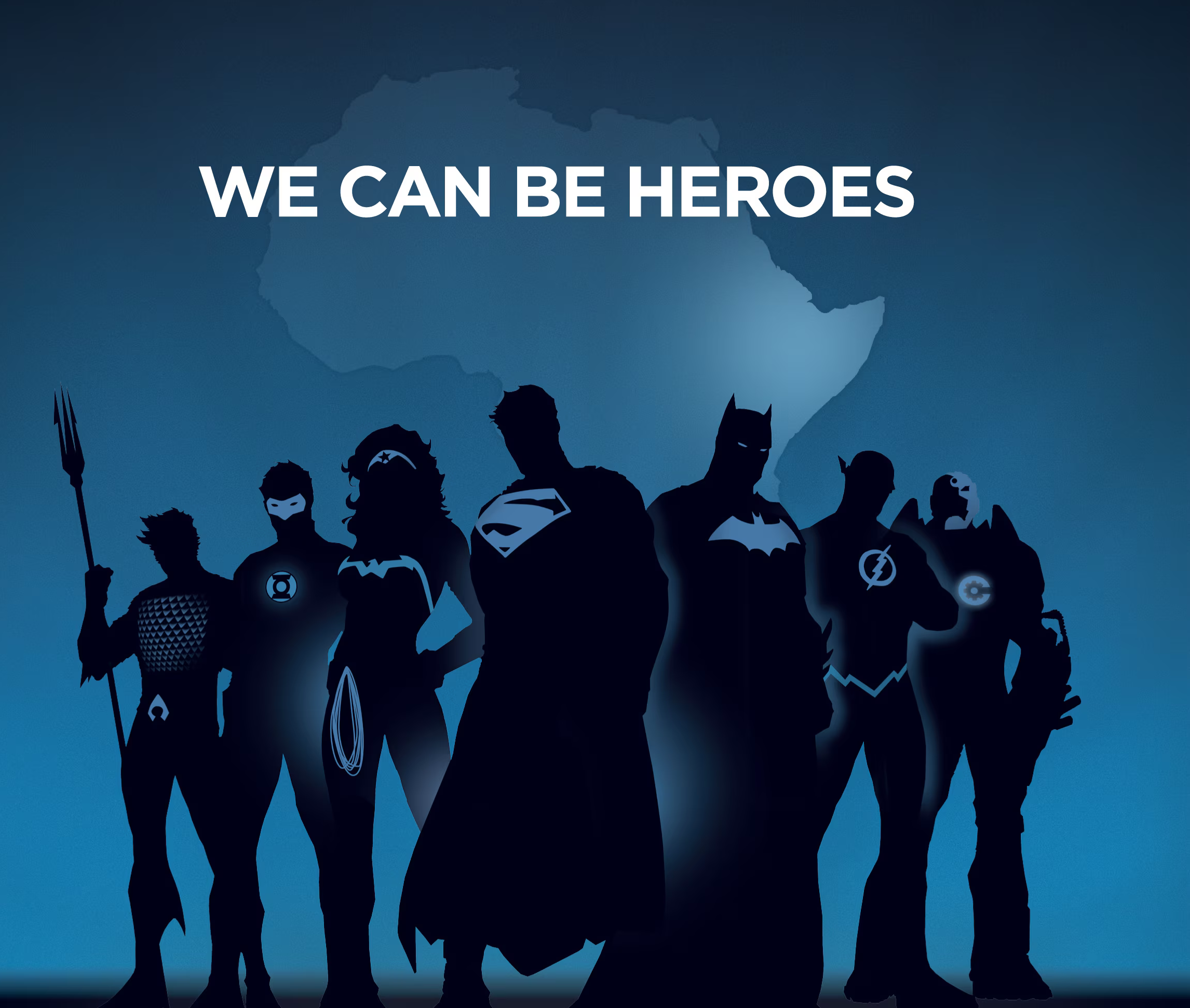

Warner Brothers / DC Comics wanted to launch the new Justice League with fanfare around helping an important cause, the famine crisis in the Horn of Africa. But it was hard to believe superheroes could have a meaningful impact on a real-world crisis. Everything felt kind of cheesy — like Superman looking out over a famine — and it came off as self-serving and inauthentic.
The team found the narrative truth inside the Justice League: these characters are stronger together than they are alone. That insight became "We Can Be Heroes" — a one-year campaign that invited the public to become heroes themselves through donations that were matched by Warner Brothers. It became one of the largest philanthropic efforts in Warner Brothers history.
The alignment was structural, not decorative. The Justice League's identity — coalition, collective strength, fighting for those who can't fight for themselves — mapped directly onto the humanitarian response that was needed. The campaign raised over $10M for the cause and helped launch the Justice League by reaching 100M+ impressions across every Time Warner property. The project became an anchor case study for the agency, Fenton Communications, and drove new opportunities for the agency for years to come.

By 2009, Wikipedia had become the world's most-used reference site — and most people didn't know it was a non-profit scraping to get by. The Wikimedia Foundation needed to raise $6 million but was asking donors to fund servers and infrastructure. The story was operational when it needed to be existential. Millions of people relied on Wikipedia daily, but the fundraising narrative gave them no reason to protect what they'd already built together.
3 weeks. $8M raised. Campaign closed early. We reframed the entire campaign around what was actually at stake: the greatest collection of knowledge in the history of the world needed to be protected — like a national park. That idea became "Wikipedia Forever," a campaign that treated Wikipedia not as a website that needed server funding, but as a shared public resource that belonged to everyone. We leveraged a community of hundreds of thousands of volunteer editors to personalize the mission and tell a larger story about empowering the world with knowledge. The appeals were humanized with a compelling video campaign and novel banners that told personal stories. The foundation shut it down early because they felt they had more funds than they needed and wanted to be responsible stewards of the donations. Wikipedia wasn't just useful. It was irreplaceable — and worth protecting.

When California legalized cannabis, hundreds of businesses that had operated in grey or black markets suddenly faced a regulatory maze: track-and-trace requirements, testing mandates, tax collection, compliance reporting, and distribution logistics they'd never dealt with before. Golden Systems had the operational expertise, but the story — and the name — didn't match the value they could deliver to brands and retailers.
We repositioned the company as C4 Distro and built a narrative around a bigger idea: transitioning the cannabis industry "from backpack to briefcase." The rebrand wasn't cosmetic. It reframed distribution as the connective tissue between an informal market and a legitimate regulated economy. C4 wasn't moving products — they were moving an entire industry forward and could help brands "blow up" the way they dreamed with practical go-to-market strategies and implementation. That story attracted partners, retail doors, and brand relationships that "another logistics company" would not have attracted. More importantly, the framing enabled the company to build a unique culture grounded in delivering a best-in-class experience to stakeholders.